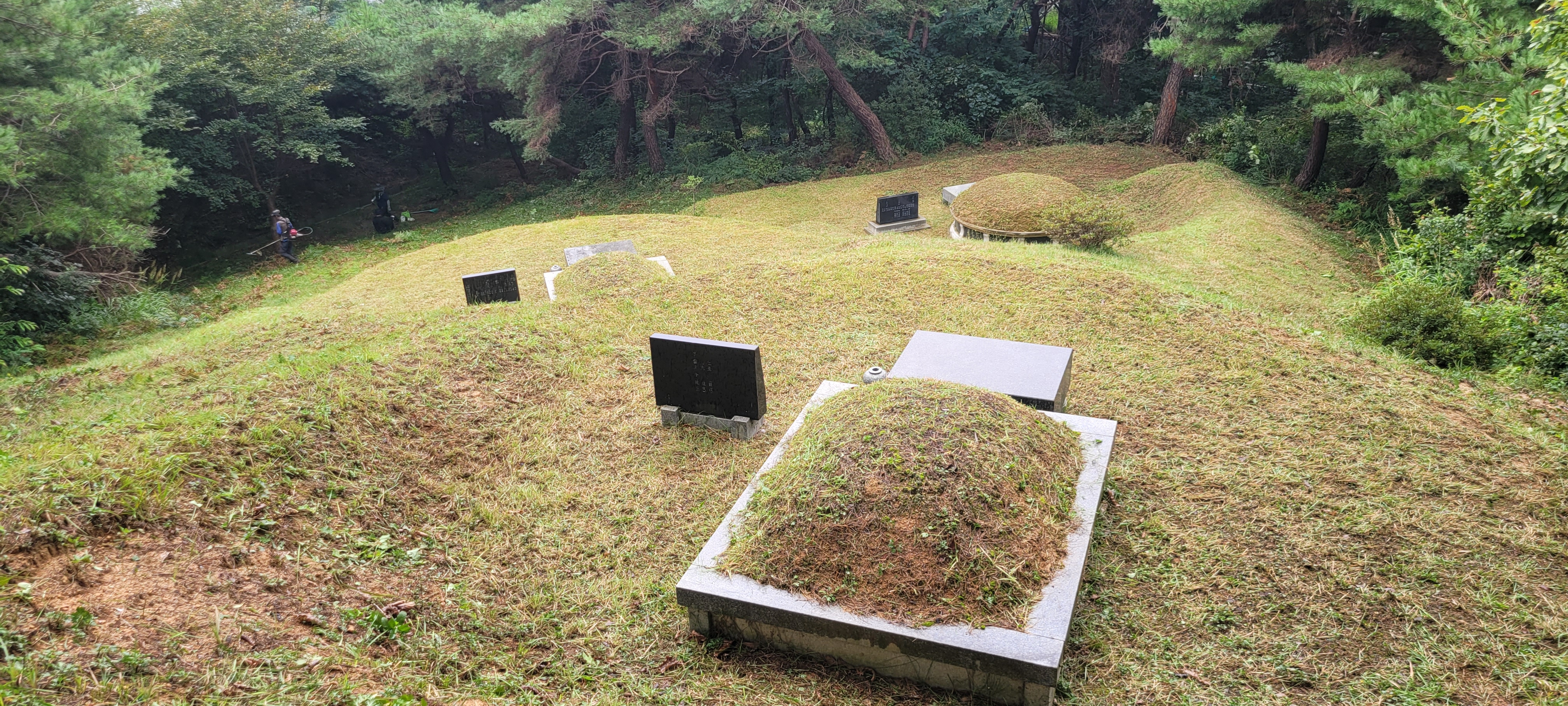
韓国の友人が四世代前から続く彼の家の墓所の写真を送ってくれた。去年の夏雑草を刈ったときに撮ったという。
ひと昔前まで韓国の埋葬は土葬が一般的だったようだが、いまはほとんどの人が火葬だという。土葬か火葬かは別として、石墓より土饅頭型の墓のほうが温もりがあっていい、と僕は思う。
韓国の友人は僕の遺骨をこの墓の一角に入れるという。写真奥の一段低い墓に入れるか、墓の近くに僕の好きな樹木を植え、その根に埋葬するというのだ。ありがたいことこの上ない。
この話しを聞いて埋葬・血縁・家族・地縁・仏教・基督教・道教・神道など、いろいろなことを考えた。墓や夫婦・家族とはいったい何なのだろう、地縁・血縁や友情・愛情だけでは捉えられない、仏教でいう眷属ということか。
한국 친구가 4대 전부터 이어져 온 자기 집 묘지의 사진을 보내주었다. 작년 여름 잡초를 베던 중에 찍은 것이라고 한다.
예전까지만 해도 한국의 장례 방식은 토장이 일반적이었던 것 같지만, 지금은 대부분의 사람이 화장을 한다고 한다. 토장이든 화장이든 별개로, 돌무덤보다 흙으로 만든 만주 모양의 무덤이 더 따스한 정감이 느껴져서 좋다고 나는 생각한다.
한국 친구는 내 유골을 이 묘지의 한 구석에 안치하겠다고 한다. 사진 뒤쪽에 있는 한 단 낮은 무덤에 넣거나, 묘지 근처에 내가 좋아하는 나무를 심고 그 뿌리 아래에 안장하겠다는 것이다. 이보다 더 감사한 일은 없을 것이다.
이 이야기를 듣고 장례·혈연·가족·지연·불교·기독교·도교·신도 등 여러 가지에 대해 생각했다. 무덤이나 부부·가족이란 도대체 무엇일까, 지연·혈연이나 우정·애정만으로는 파악할 수 없는, 불교에서 말하는 ‘권속(眷属)’을 말하는 것일까.
A Korean friend of mine sent me a picture of his family’s cemetery, which has been there for four generations. He said he took the picture last summer when he was cutting weeds.
Burial used to be the norm in Korea until a few decades ago, but now most people are cremated. Regardless of whether burial is by earth or cremation, I think that a manju-shaped grave is better than a stone grave because of its warmth and warmth.
My Korean friend said he would put my remains in one corner of this grave. He will either put them in the grave at the back of the photo or plant my favorite tree near the grave and bury them in its roots. I am very grateful.
Hearing this story, I thought about burial, blood, family, land, Buddhism, Christianity, Taoism, Shintoism, and many other things. What exactly is a grave, a couple, a family, or what Buddhism explains as kenzoku? (Translated with DeepL.)


Leave a Reply