3月に講談社が出版したエベレストは居酒屋です(渡邊直子)[仮訳: 에베레스트는 술집이다. Mt Everest is a pub.]を読んだ。
娘が著者の大ファンで出版記念トークショーに参加するよう頼まれていたのに果たせなかった。ショーの数日後、予約してあった著書が届いた。約束を守らなかった罪悪感から読んだのだが、読み始めると著者の生き方と気取らない文章に引かれ一気に読んだ。期せずして著者のファンの一人になった。今回も娘のお蔭で新しい地平を見ることができた。
著者はエベレストの8000mを越える全14座を踏破した初の日本人女性だが、いわゆる登山家ではない。登山家とシェルパ*という一般的な関係を超えたシェルパたちと彼女との独自の関係を築いている。それを可能にしたのは彼女の自然体の生き方と同じく看護師だった著者の母親の独特な育て方だったろう。
*ネパールの少数民族のひとつ、ネパールのほか中国領チベットやインド・ブータンの一部に住む。シェルパによるヒマラヤ登山支援はよく知られている。[Wikipedia]
プロローグにある次の文章が彼女の生きざまと人となりを明快に教えてくれる。以下引用する(句読点や表記など一部編集)。
| エベレストは居酒屋です: プロローグより |
|---|
| 日本の人にとって「ヒマラヤ」は過酷な場所であり、簡単には行けないところというイメージがまだまだあるような気がしています。でも、私にとってヒマラヤは完全に「息抜き」なんです。日本にいると人間関係で息苦しくなったり、いろいろなことを億劫に感じることが多いのですが、ヒマラヤで過ごすと、いつも不思議と「素直な自分」に戻れる感覚があります。人と話すことが苦にならず、心が解きほぐれていく。 |
| シェルパたちの考え方に触れたり、毎日起こるハプニングやふだんできない刺激的な体験をしたり、圧倒的な景色を目のあたりにすることで、日常の悩みや不安が一気にちっぽけになってくるのです。つまり、私にとってヒマラヤは皆さんが仕事を終えて同僚や友人と居酒屋で一杯やるようなもの。そんな<居酒屋通い>を続けていたら、いつのまにかヒマラヤの8000m峰に31回も登っていました。現時点で世界の女性で最も多い登山回数です。自分らしい記録だと自負しています。 |
| しかし、全14座を制覇した初の日本人女性という記録を残すことになったことがすごいとはまったく思っていません。富士山に誰でも登れるようになったのと一緒で、いまや14座も誰だって制覇することができる。皆が簡単に登ったわけではありませんが、世界にはすでに14座全登頂者が80人以上います(2025年10月現在)。 |
| 私は休暇を楽しむためにヒマラヤに来ているので、記録にはほとんど興味がありません。登頂はあくまで2番目の目的で一番は楽しむこと、そしてリフレッシュすること。根底にあるのは「嫌いな自分を好きになりたい」という思いです。ヒマラヤで過ごしていると子どものように無邪気になれる。取り繕うことのできない自然のなかで今まで知らなかった自分の良いところを発見できたりもする。ヒマラヤにいるときこそ本当の自分でいられる気がするんです。 |
| もし誇れることがあるとすれば看護師として働いた給料で登り続けていたこと、30回以上登っているのに大きなケガや凍傷もなく無事に日本に帰っていることでしょう。 |
著者のすごさはシェルパを単に登頂のための荷物運びやアタックルート開拓者として利用するのではなく、同じ仲間として同伴者として接することにある。だから、彼らとのやりとりを通じてネパール語を学び、ベースキャンプでの食事も登山家たちと一緒ではなく、シェルパ専用テントに入ってする。ふつうの登山家は英語で用を済ませ、シェルパたちと個人的に交わることはしない。
親しくなったシェルパたちがふつうは話さない彼らの生立ちやふだんの暮らしのことを彼女に話す、そういう人間関係を築ける人なのだ。ただ、日本社会にいると彼女のそういう性質は表れない。思ったことはすぐ話してしまうからだろう、その点シェルパたちと似ている。彼らは約束を守るが、規則に束縛されず、大事なことが家族や親戚に生じれば当然のようにそれを優先する。そういう生き方を著者は求めていた、だから資金を貯めてくり返しヒマラヤのシェルパに会いに行く。
著書の末尾の文章を引用する。本人が述べているとおり、渡邊直子氏はいつかネパールに移住するに違いない。本来の自分であり続けるために、そしてチベット仏教(ラマ教)の死生観のなかで生きて死んでゆくために。
| エベレストは居酒屋です: エピローグより |
|---|
| 私にとってヒマラヤは特別な舞台であると同時に居酒屋にふらっと立ち寄るような<休暇の場所>でもあります。疲れを癒やし本当の自分を取り戻すために通う場所。 |
| 今後はネパールへの移住も考えています。現在は私自身が主催しているヒマラヤを一緒に楽しむ企画を行なっていますが、無料で参加できるわけではありません。大人は働けばその費用を工面できますが、子どもは親の経済状況に左右されてしまう。だからこそ、費用を出せない子どもでも参加できる仕組みが作れないか模索中です。 |
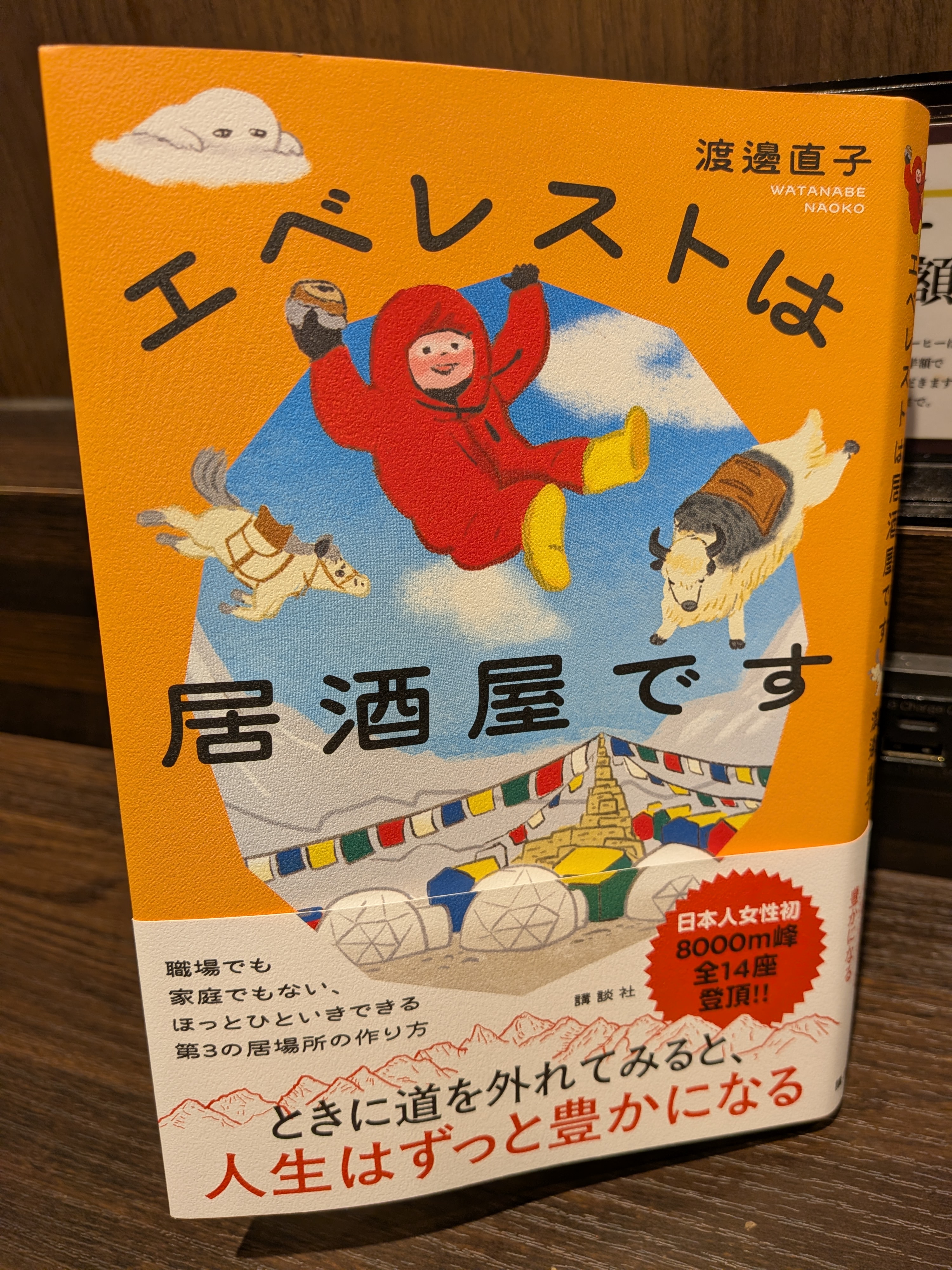
I read Mt. Everest Is a Pub (Naoko Watanabe), published by Kodansha in March.
My daughter is a huge fan of the author and had asked me to attend the book launch talk show, but I wasn’t able to make it. A few days after the event, the book I had pre-ordered arrived. I started reading it out of guilt for breaking my promise, but once I began, I was drawn in by the author’s way of life and her unpretentious writing style, and I read it all in one sitting. Unexpectedly, I became one of her fans. Once again, thanks to my daughter, I was able to discover new horizons.
The author is the first Japanese woman to have conquered all 14 peaks over 8,000 meters, including Everest, but she is not what you would call a “mountaineer.” Transcending the typical relationship between mountaineers and Sherpas*, she has forged a unique bond with the Sherpas—a relationship in which, from their perspective, she is the mountaineer. This was likely made possible by the unique upbringing she received from her mother, who was also a nurse.
*One of Nepal’s ethnic minorities. In addition to Nepal, they reside in Chinese-administered Tibet and parts of India and Bhutan. Sherpa support for Himalayan mountaineering is well known. [Wikipedia]
The following passage from the prologue clearly illustrates her way of life and character. It is quoted below (with some editing of punctuation and formatting).
“Everest is a pub”: From the Prologue
I feel that for Japanese people, the image of the “Himalayas” as a harsh place—somewhere you can’t just easily go—is still deeply ingrained. But for me, the Himalayas are purely a “breather.” When I’m in Japan, I often feel suffocated by interpersonal relationships or find various things a hassle, but when I spend time in the Himalayas, I always have this strange sensation of returning to “my true self.” Talking to people doesn’t feel like a burden, and my heart relaxes.
Being exposed to the Sherpas’ way of thinking, experiencing the daily mishaps and thrilling adventures that wouldn’t happen back home, and witnessing the overwhelming scenery—all of this makes my everyday worries and anxieties seem trivial in an instant. In other words, for me, the Himalayas are like going out for a drink at an izakaya with colleagues or friends after work. By continuing these “izakaya visits,” I had climbed the Himalayas’ 8,000-meter peaks 31 times before I even realized it. As of now, that’s the highest number of climbs by any woman in the world. I’m proud to say it’s a record that’s uniquely mine.
However, I don’t think it’s particularly impressive that I was the first Japanese woman to conquer all 14 peaks. Just as anyone can now climb Mount Fuji, anyone can now conquer all 14 peaks. Not everyone has done it easily, but there are already over 80 people in the world who have summited all 14 (as of October 2025).
I come to the Himalayas to enjoy my vacation, so I have almost no interest in records. Reaching the summit is secondary; my top priority is to have fun and recharge. At the core of it all is the desire to “learn to like the parts of myself I dislike.” When I’m in the Himalayas, I can become as innocent as a child. Surrounded by nature that cannot be faked, I sometimes discover good qualities in myself that I never knew existed. It’s when I’m in the Himalayas that I feel I can truly be myself.
If there’s anything I can be proud of, it’s that I’ve continued climbing using the salary I earned as a nurse, and that despite having climbed over 30 times, I’ve returned to Japan safely without any major injuries or frostbite.
What makes the author remarkable is that he doesn’t treat the Sherpas merely as porters for the summit or as trailblazers for the ascent route, but rather as equals and companions. That is why she learned Nepali through her interactions with them and even ate her meals at base camp in a tent reserved exclusively for Sherpas, separate from the other climbers. Most climbers get by using English and never interact with the Sherpas on a personal level.
She is the kind of person who can build such relationships that the Sherpas she has grown close to confide in her about their backgrounds and daily lives—things they don’t usually talk about. However, when she is in Japanese society, that side of her doesn’t come out. This is likely because she speaks her mind immediately. In that respect, she resembles the Sherpas. They keep their promises but are not bound by rules; if something important happens to their family or relatives, they naturally prioritize it. The author was seeking that kind of way of life. That is precisely why she saves money and repeatedly travels to the Himalayas to meet the Sherpas.
I’ll quote a passage from the end of the book. As she herself states, Naoko Watanabe will undoubtedly move to Nepal someday. To remain true to her authentic self, and to live and die within the Tibetan Buddhist (Lamaist) view of life and death.
From the Epilogue of Everest Is a Pub
For me, the Himalayas are both a special stage and a “vacation spot” where I can drop in casually, just like stopping by a pub. It is a place I visit to heal my fatigue and rediscover my true self.
I am also considering moving to Nepal in the future. Currently, I organize events where people can enjoy the Himalayas together, but participation is not free. Adults can cover the costs by working, but children are at the mercy of their parents’ financial situation. That is precisely why I am exploring ways to create a system that allows children who cannot afford the fees to participate as well.


 wakibitos
Leave a comment