芭蕉(1644-94)の「奥の細道」を何年かぶりに読んだ。高校生のときに繰り返し音読した冒頭部分はほぼ暗記している。格調高い文章が続き、著名な句に会うと親しみを感じるが、それ以上のものがない。そんななか42等栽に強く引かれた。二人の老人の再会に感動するとはおまえも歳をとったものだ。水沢(現奥州市)で過ごした高校生時代から60年近い歳月が経っている。
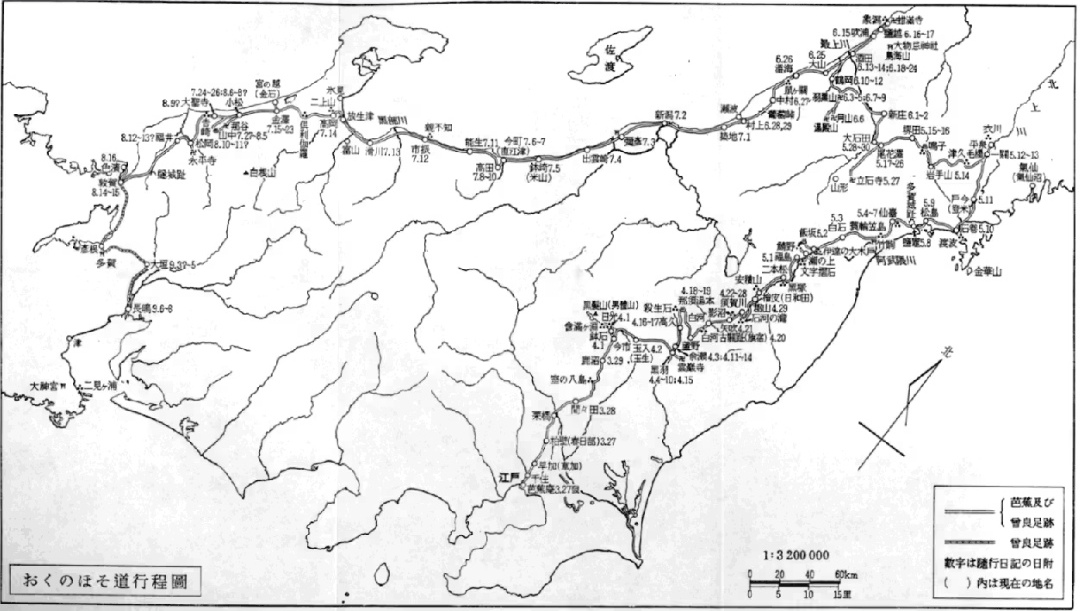
福井は三里計なれば夕飯したゝめて出るにたそかれの路たどたどし、爰に等栽と云古き隠士有、いづれの年にか江戸に来りて予を尋、遙十とせ余り也、いかに老さらぼひて有にや将死けるにやと人に尋侍ればいまだ存命してそこそこと教ふ。市中ひそかに引入てあやしの小家に夕貌へちまのはへかゝりて鶏頭はゝ木ゞに戸ぼそをかくす、さては此うちにこそと門を扣ば侘しげなる女の出ていづくよりわたり給ふ道心の御坊にや、あるじは此あたり何がしと云ものゝ方に行ぬ、もし用あらば尋給へといふ、かれが妻なるべしとしらる、むかし物がたりにこそかゝる風情は侍れとやがて尋あひてその家に二夜とまりて*、名月はつるがのみなとにとたび立、等栽も共に送らんと裾をかしうからげて路の枝折とうかれ立。 *源氏物語「夕顔」巻
↓Quoted from 42 Tosai of the Narrow Road to Oku by Donald Keene:
Fukui was only six or seven miles away, so I set out after supper, walking uncertainly along the twilit road. Fukui is where Tosai has long lived as a recluse. Once—in what year was it, I wonder?—he came to Edo and called on me. It must have been well over ten years ago. I thought how old and decrepit Tosai would now be, or perhaps he was even dead. I asked someone about him, and was informed he was still living and his house was in such-and-such a place. Tosai’s shabby little house was buried in an out-of-the-way corner of the town. Moonflowers and bottlegourds crept over the walls, and cockscomb and broom-grass grew so high they hid his door.
“This must be the place,” I thought, and knocked on the gate. A poorly dressed woman emerged and asked. “Where have you come from on your pilgrimage, your reverence? The master has gone to visit a gentleman in the vicinity. If you have business with him, please look for him there.” I gathered she must be his wife. I thought, “This is just like a scene from an old novel,” and went off in search of Tosai. I found him without trouble, and spent two nights in his house. Then I set out to see the harvest moon at the Bay of Tsuruga. Tosai, offering to guide me, tucked up the skirts of his kimono in a comical way. “I’ll be your guide!” he declared in high spirits.
ちなみに、「奥の細道」尿前(しとまえ)の關(せき)に次の句がある。蚤虱(のみしらみ)は一茶もよく使う題材だが、芭蕉の句は旅宿の居心地の悪さやよく眠れなかった夜を詠んでいるように思われ、一茶の句では蚤虱が彼の背中で寄り合いをする情景が目に浮かぶ。作者はそのようすを楽しげに見ている。
- 蚤虱馬の尿(ばり)する枕もと 芭蕉
- 蚤虱よりあひもする背中かな 一茶
 wakibitos
Leave a comment